



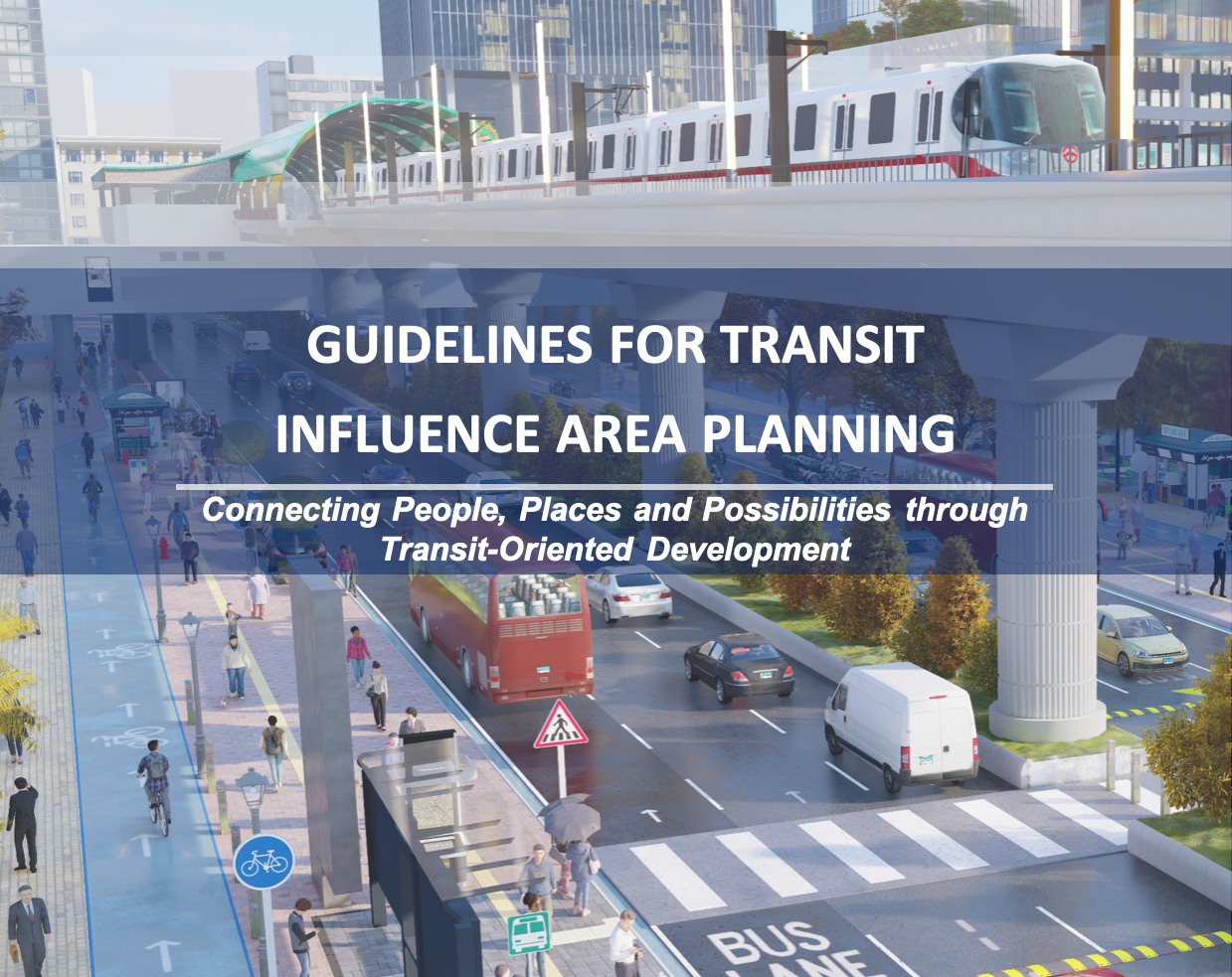
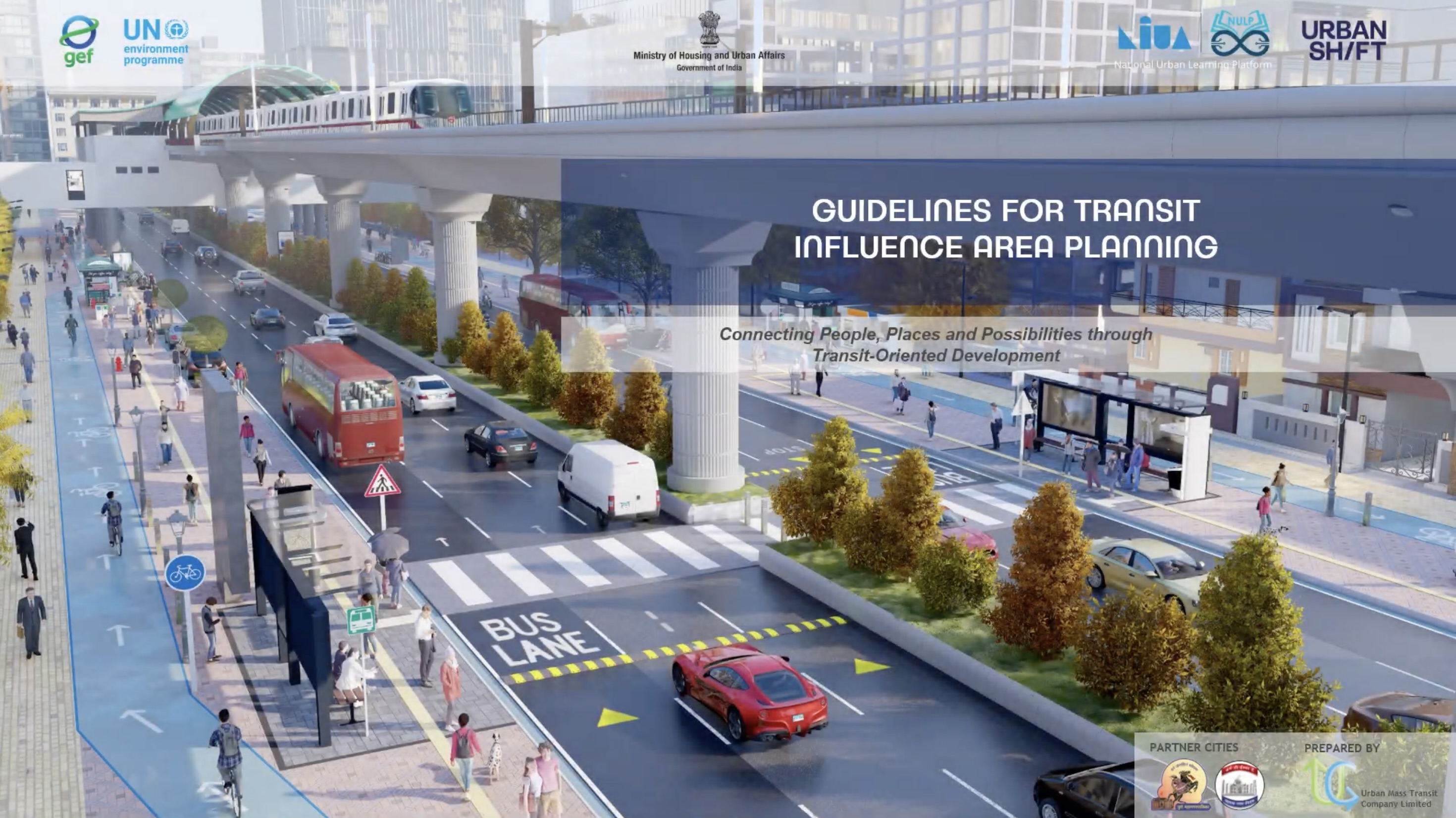
Guidelines for Transit Influence Area Planning
Connecting People, Places and Possibilities throug...



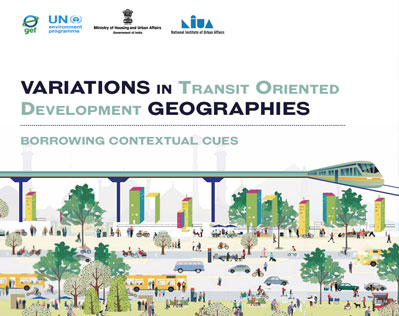
The Variations in Transit Oriented Development (TOD) Geographies: Borrowing Contextual Cues is a collection of case studies collated to provide urban practitioners with national and global insights into TOD practices. It examines how cities have interpreted TOD, by adapting to local needs, geography, urbanisation patterns, and institutional frameworks.
This document explores TOD as a planning tool, tracing its connections with sustainability and the Sustainable Development Goals. It also highlights major planning principles and components that define effective TOD, like density, diversity, design, accessibility, and connectivity.
In addition to this, the compendium explores a rich set of case studies, from Indian cities like Delhi, Pune, Bengaluru, and Ahmedabad and from global examples like Singapore, Copenhagen, Curitiba, and Tokyo.
These examples unpack how TOD is used to tackle different challenges whether it is reducing traffic congestion, improving public transport access, or making cities more inclusive and climate resilient. From exploring various planning norms, financing models to showcasing people-centric urban design, the compendium serves as a practical guide for planners, city leaders, and development practitioners.
Connecting People, Places and Possibilities throug...

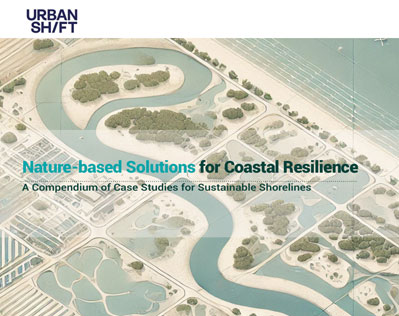
Through the application of Nature-based Solutions...

Cities are at the forefront of the climate crisis....

Explore how cities around the world are turning to...
As cities increasingly adopt digital solutions, th...